The Lamborghini Temerario can creep away silently on electricity. It can also spin its V8 to 10,000rpm. Apparently, compromise means something different in Sant’Agata.
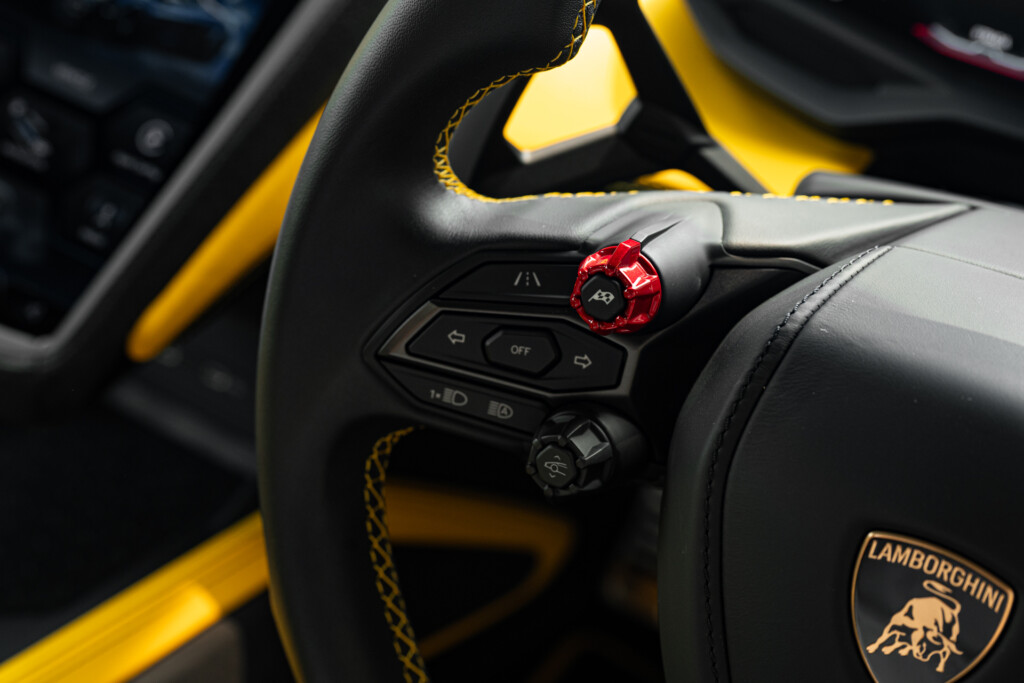
The strangest thing about starting a Lamborghini Temerario is that, sometimes, nothing happens. You lift the little red fighter-jet cover, thumb the starter and wait for the sort of explosion that normally accompanies waking a Lamborghini.
Instead, there is a whirr. Perhaps a beep. Then silence.
The Temerario defaults to its Città driving mode and, battery permitting, moves away under electric power alone. So here you are, sitting in a low, wide, wedge-shaped Lamborghini with a hexagonal exhaust pipe large enough to accommodate household pets, gliding out of the carpark with all the menace of a golf buggy.
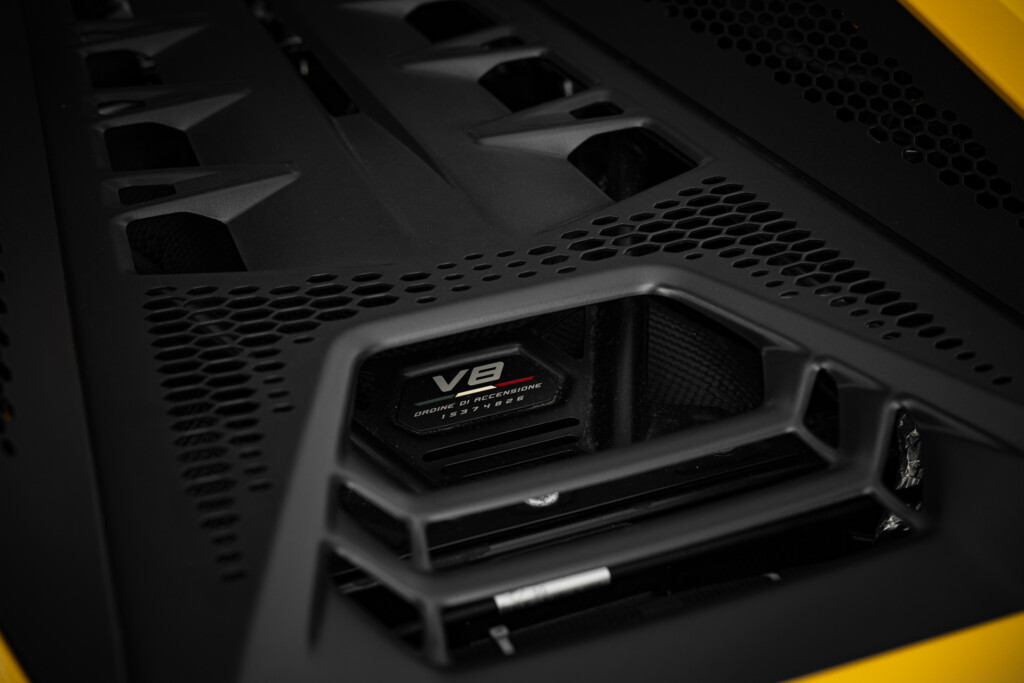
Do not worry. The noise comes later. And when it does, it arrives courtesy of one of the most remarkable combustion engines fitted to a modern road car: an all-new 4.0-litre, twin-turbocharged V8 that spins to 10,000rpm.
The future, Lamborghini seems to be saying, can wait outside for a moment.
The Temerario replaces the Huracán, which means it has inherited one of the more difficult jobs in the car industry.
Its predecessor had a naturally aspirated V10. That alone was enough to make the Huracán interesting before you got to the dramatic styling, ridiculous performance or the fact that simply seeing one at a petrol station could brighten your Tuesday.
The Temerario has eight cylinders instead. It also has two turbochargers, a plug and three electric motors.
On paper, this sounds like the usual story of modern performance cars: fewer cylinders, more electronics and a press release full of assurances that everything is actually better now. Except Lamborghini appears to have taken the loss of its V10 rather personally.
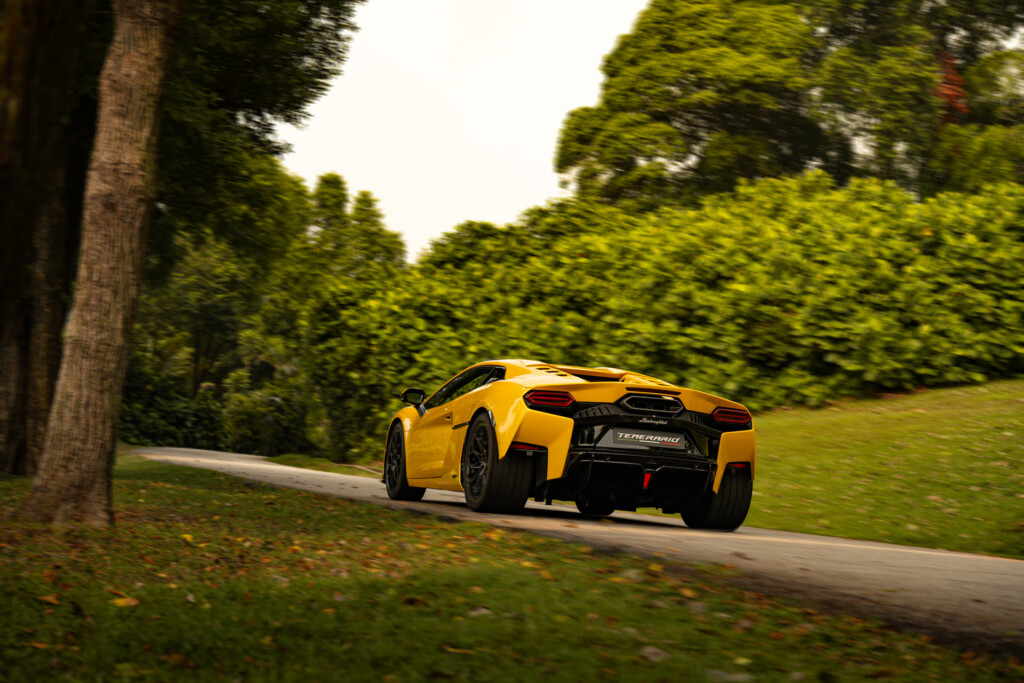
So it built a flat-plane-crank V8 from scratch, gave it titanium connecting rods and allowed it to rev to 10,000rpm. The petrol engine alone produces 800hp, while the complete hybrid system delivers 920hp. Two electric motors drive the front wheels, while another sits between the engine and eight-speed dual-clutch gearbox. The result is four-wheel drive, 0 to 100km/h in 2.7 seconds and a top speed of 343km/h.
The clever bit is not simply that Lamborghini has thrown electric motors at the problem, but rather how they are used. Large turbochargers are useful when an engine is spinning at enormous speeds because they can shift a great deal of air. Unfortunately, large turbochargers also tend to take time to wake up.
The Temerario’s electric motors fill that gap. At low engine speeds, electrical assistance supplies the response that the turbos cannot. As the revs rise and boost builds, the V8 gradually takes over, so instead of a large lump of torque suddenly arriving halfway through a corner, the acceleration builds progressively.
Put your foot down and the car simply goes. Very quickly. Even with its relatively small battery depleted, the Temerario can still call upon close to 800hp from the combustion engine, while hard braking rapidly replenishes enough energy for the electrical assistance to rejoin proceedings.
In electric mode, the combustion engine stays asleep and the front motors pull the car along, effectively turning your 920CV Lamborghini into a front-wheel-drive EV producing roughly the power of a modest hatchback. Pure-electric range is only around 10km.
Some will inevitably ask what the point is, but imagine returning home late at night. Your neighbour does not need to hear a 10,000rpm V8 announce your arrival, since they almost certainly know what you drive.
There is also something wonderfully absurd about possessing a car capable of 343km/h and deliberately using 2 per cent of its personality to creep silently through a basement carpark.
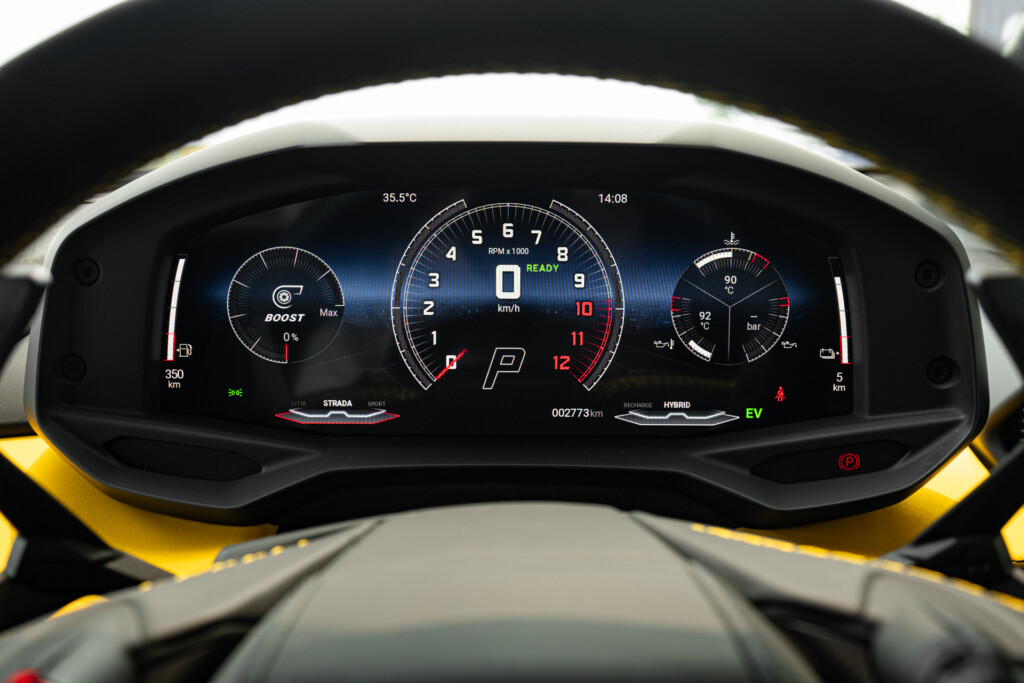
The really unusual bit happens towards the far end of the rev counter. Turbocharged road-car engines generally do not rev to 10,000rpm. Motorcycles do, racing engines do, and household appliances do, presumably, shortly before their warranties become invalid.
Low down, the engine is not especially melodic. The flat-plane V8 can sound hard-edged and slightly industrial, particularly compared with the glorious V10 it replaces. The real magic arrives above roughly 6,500rpm, where the engine becomes increasingly fierce as it chases that five-figure redline.
That also creates a slight problem; by the time you have properly begun exploring the top half of the rev range, you will already be travelling at speeds that invite difficult conversations with the authorities.
There is simply no legal stretch of Singapore road long enough to properly exploit what the drivetrain can do. It is the motoring equivalent of buying a Steinway grand piano for a studio apartment. You can still enjoy owning it, just not at full volume.
Perhaps that is why one of the Temerario’s more impressive talents has nothing to do with speed.
The Temerario has up to 13 combinations of its driving and hybrid-energy settings, built around Città, Strada, Sport and Corsa modes. Yet you do not need a laminated instruction card to drive it to lunch.
Leave everything sensible and it is remarkably approachable. The eight-speed dual-clutch transmission will shuffle through the gears by itself. The suspension can be made compliant enough to tolerate imperfect roads, while a front-axle lift system is available for ramps and speed humps.
Sport mode actually allows the Temerario to feel more rear-driven and playful, while Corsa calls more heavily on the front electric motors to maximise traction and lap-time efficiency. There are even three levels of drift assistance. This is perhaps evidence that Lamborghini understands its customers very well.
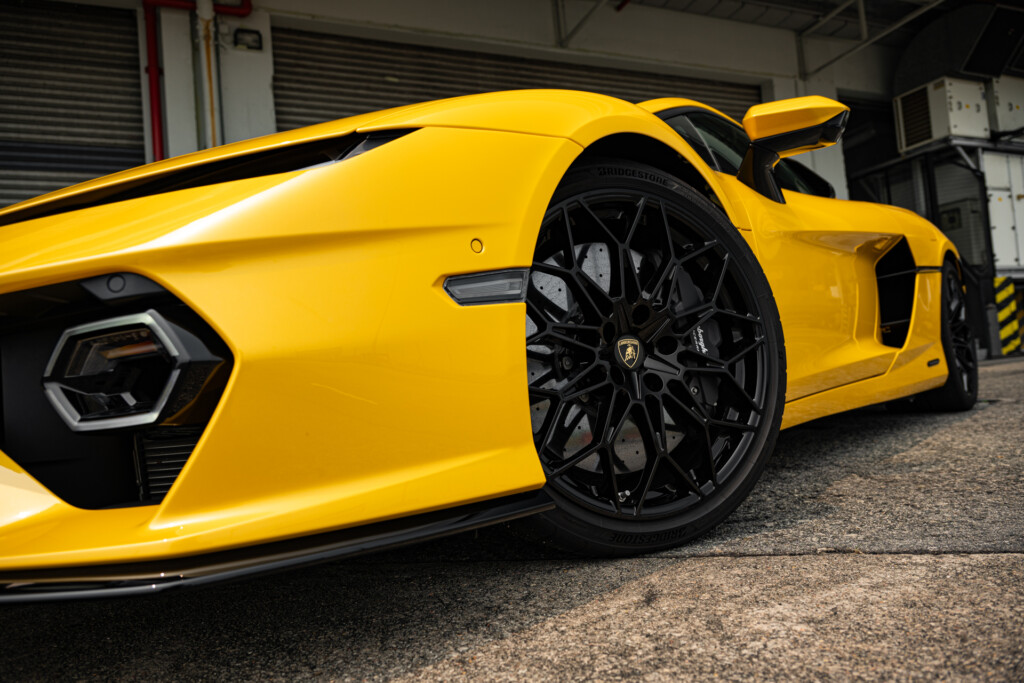
Electrification does have a price, and the currency is weight. The Temerario is more than 250kg heavier than the Huracán it replaces. Unlike the Revuelto, it does not use a carbon-fibre tub, relying instead on an aluminium spaceframe.
Ordinarily, adding the equivalent of several adult passengers to a sports car would be considered poor form. Here, the electric motors help tons. The front pair are not simply there for straight-line traction. They can distribute torque to help the car turn, pulling the nose into a corner in ways that would require a complicated mechanical four-wheel-drive system otherwise.
The Temerario still has enormous capability, but it does not require enormous courage to access it. I liken its character more closely to a Porsche 911 Turbo than a GT3 RS: ferociously fast and very effective, without demanding that every journey become qualifying at Monza.
The Huracán could occasionally seem as though it wanted to test whether you deserved to be driving it. The Temerario seems more interested in helping.
Whether this represents progress or a worrying decline in standards of intimidation is up to you. At the very least, there should be no uncertainty over what you are looking at.
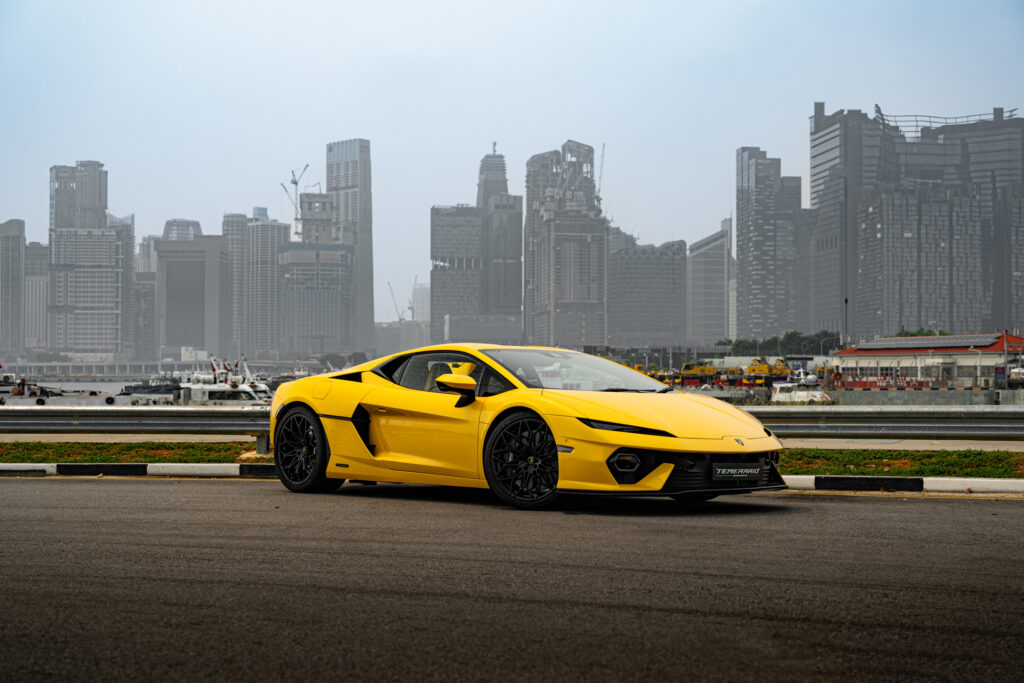
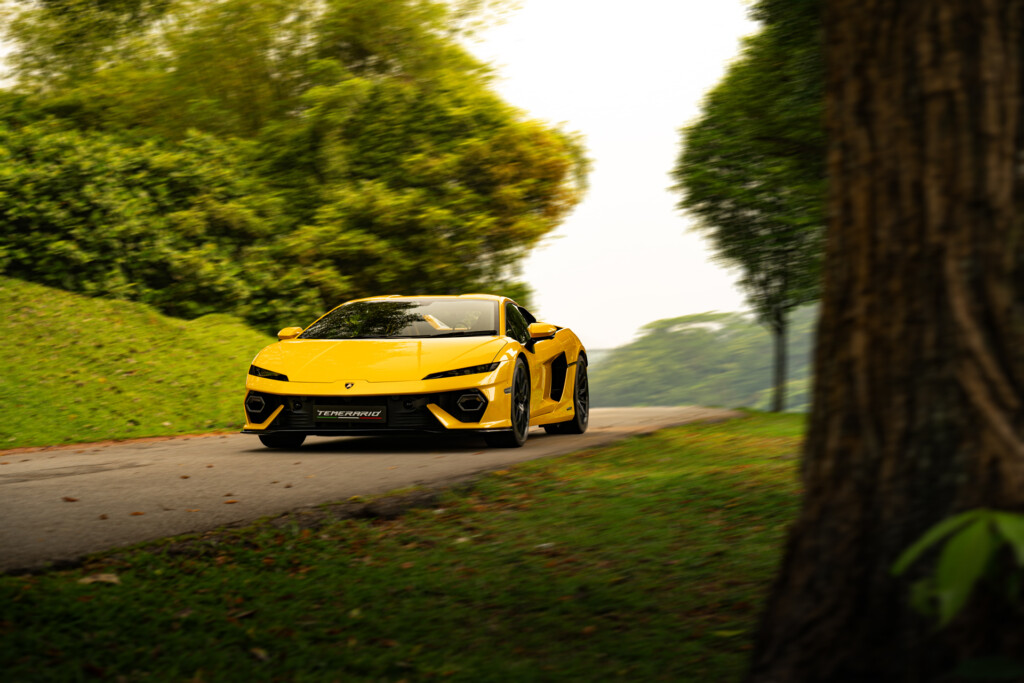
It remains low, wide and angular, although compared with some of Sant’Agata’s more recent creations, its basic shape is almost restrained.
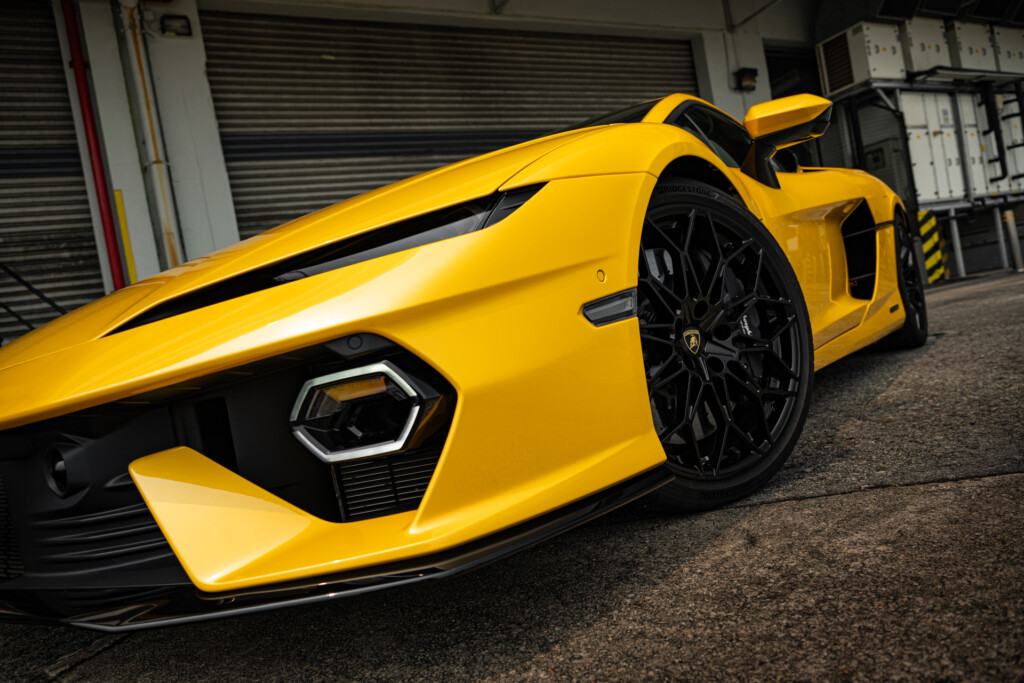
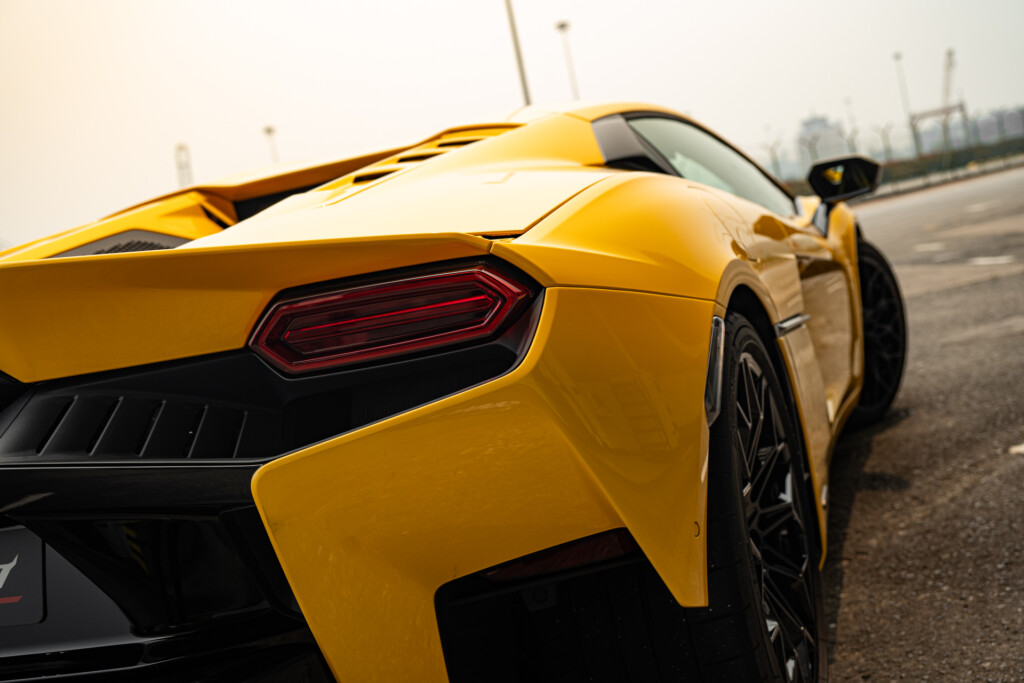
The narrow headlights give the nose a permanent scowl, while hexagonal daytime running lamps sit lower down, each with an air intake through its centre. Air is directed through the body to feed the brakes, cool the engine and create downforce rather than merely decorating the car with holes.
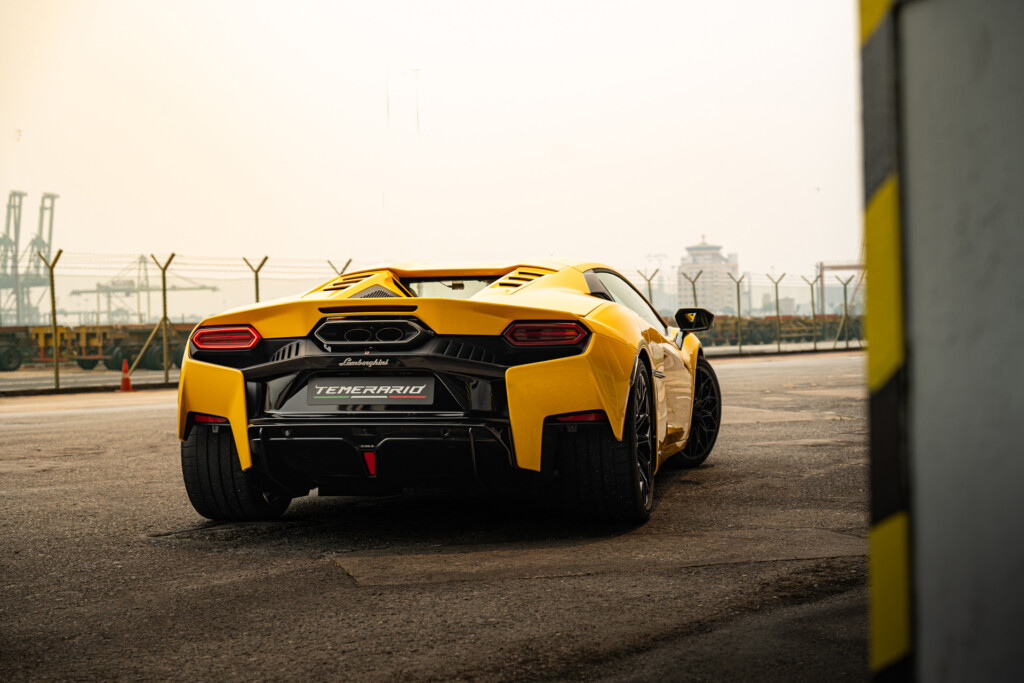
The engine itself is left exposed beneath the rear deck and at the back sits the huge central hexagonal exhaust, surrounded by enough vents and aerodynamic furniture to make very clear that luggage capacity was not the first item on the design brief.
There is an Alleggerita package, too, which adds more carbon fibre, more aggressive aerodynamics and, with carbon wheels fitted, removes around 30kg. Lamborghini says the package substantially increases downforce and aero efficiency.
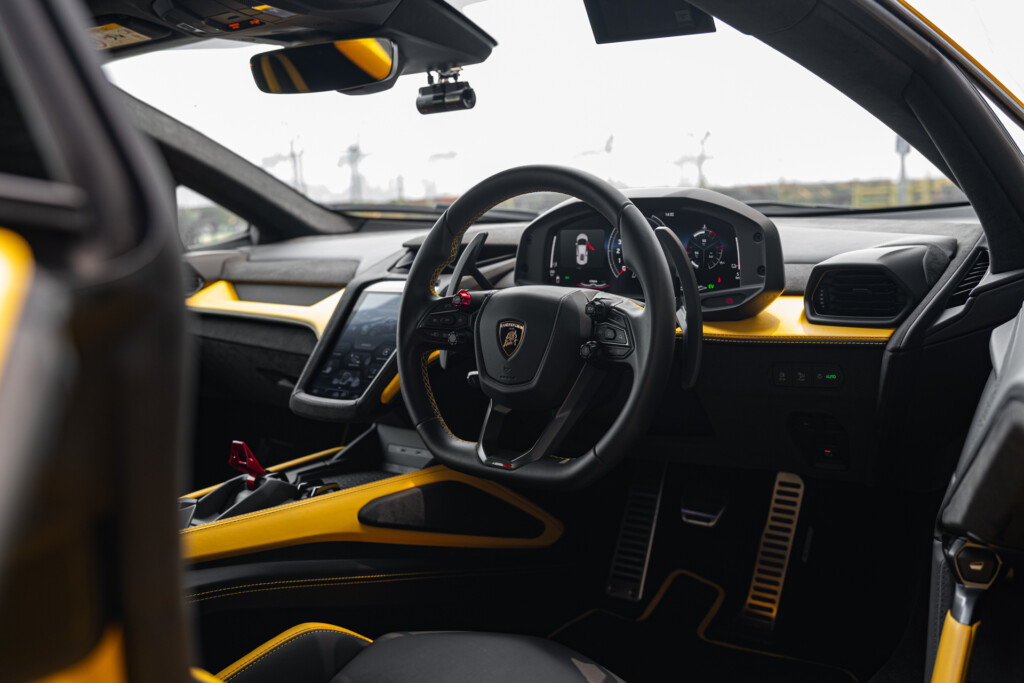
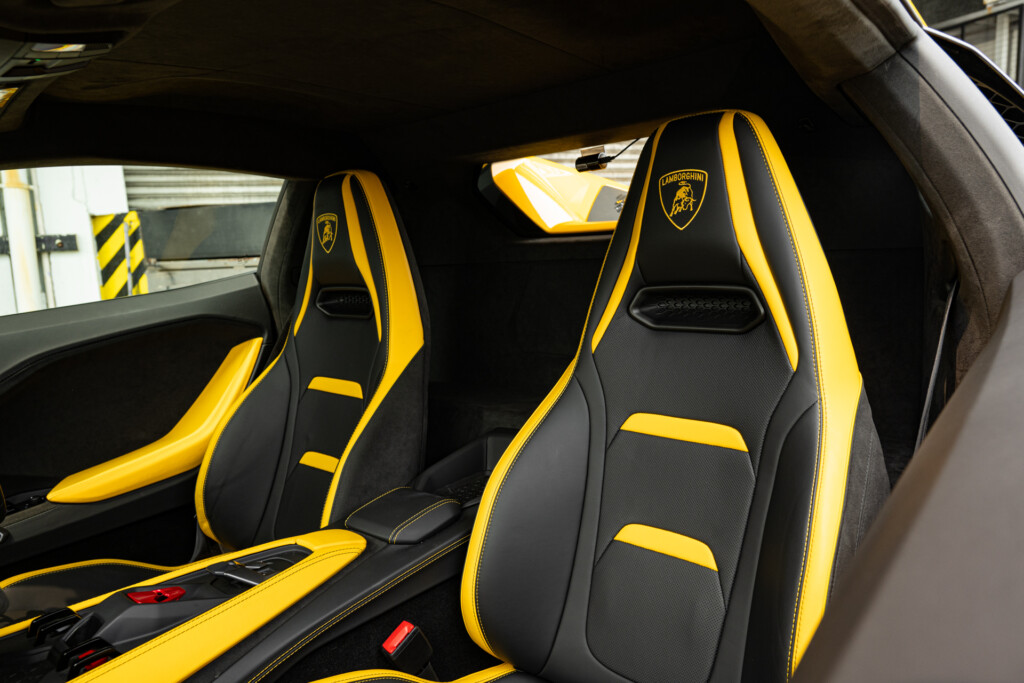
The interior contains another surprise. The wheelbase is longer than the Huracán’s, giving the Temerario noticeably more headroom and shoulder room, and simply climbing aboard is easier than before. There is even a 112-litre compartment in the nose, enough for a couple of modest bags.
The steering wheel falls naturally to hand, visibility is reasonable by mid-engined-supercar standards, and the new Comfort seats are apparently worthy of the name.
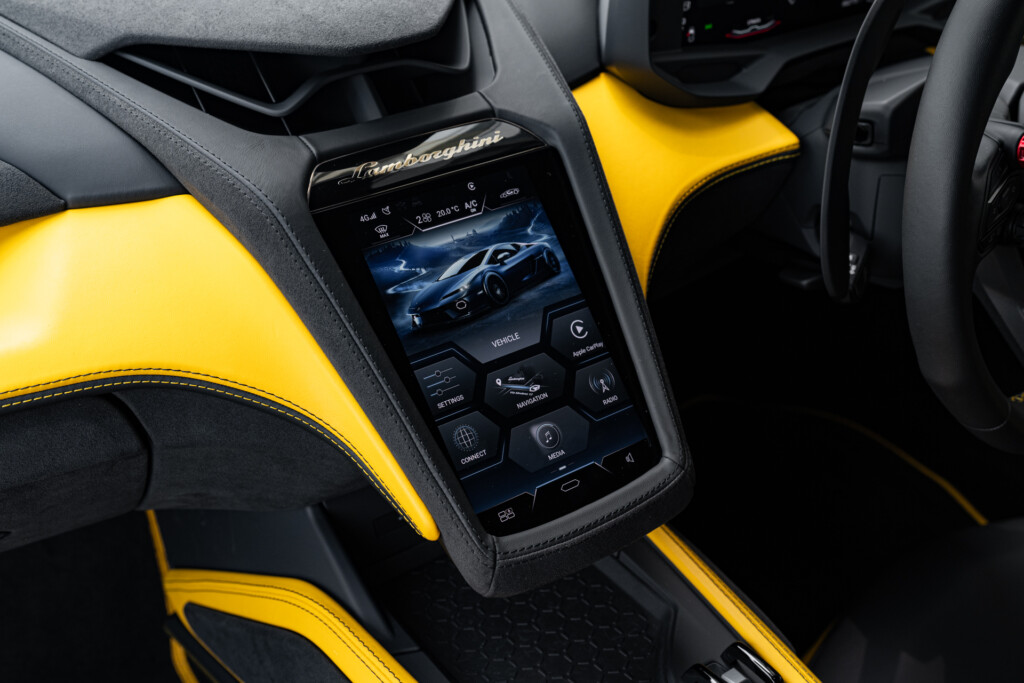
A central infotainment display handles multimedia and climate functions, while an optional passenger display means whoever is sitting beside you can see exactly how fast you are travelling and begin composing their complaint with accurate supporting evidence.
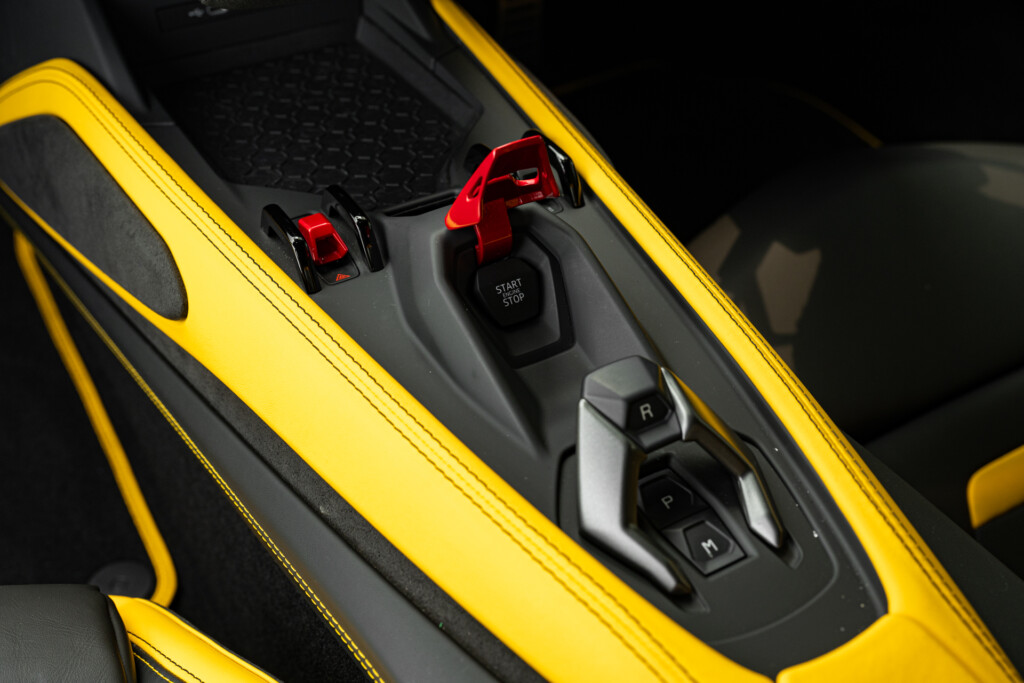
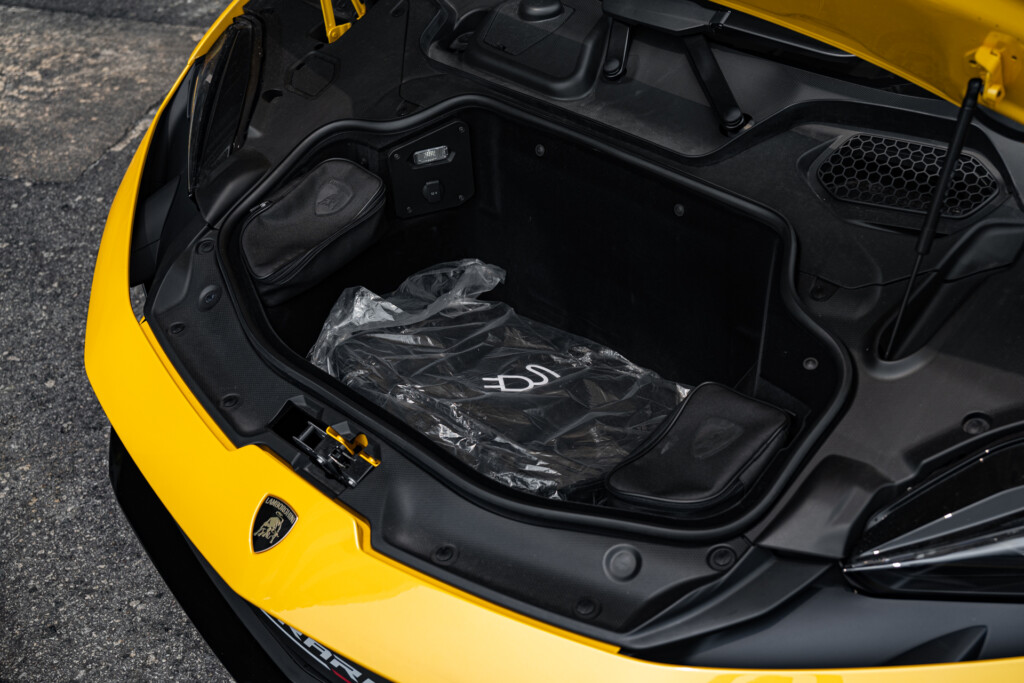
Thankfully, some theatre remains physical. The starter button still hides beneath its red cover, the vast gearshift paddles are fixed to the steering column and the cabin contains enough hexagons to make a honeybee feel at home.
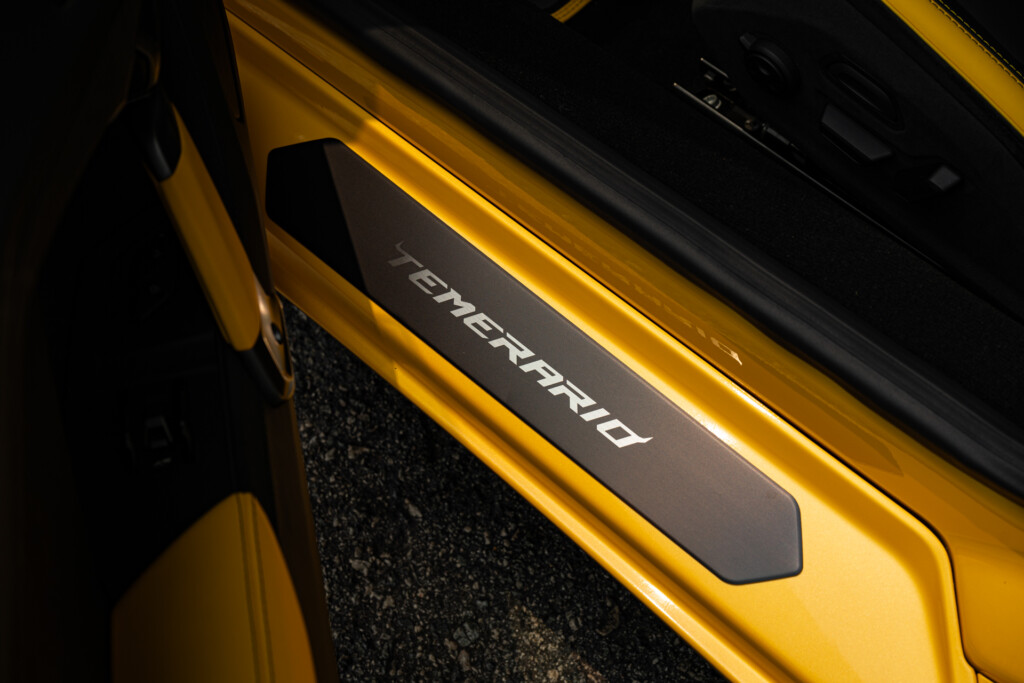
The easy thing would have been to mourn the V10. Instead, Lamborghini appears to have approached hybridisation with the same attitude it applies to everything else: if something must be done, it should preferably be done to excess.
It is heavier, vastly more complicated and probably impossible to repair in 30 years without access to several computers and an electrical engineering degree.
But, it still has the important ingredient: drama.
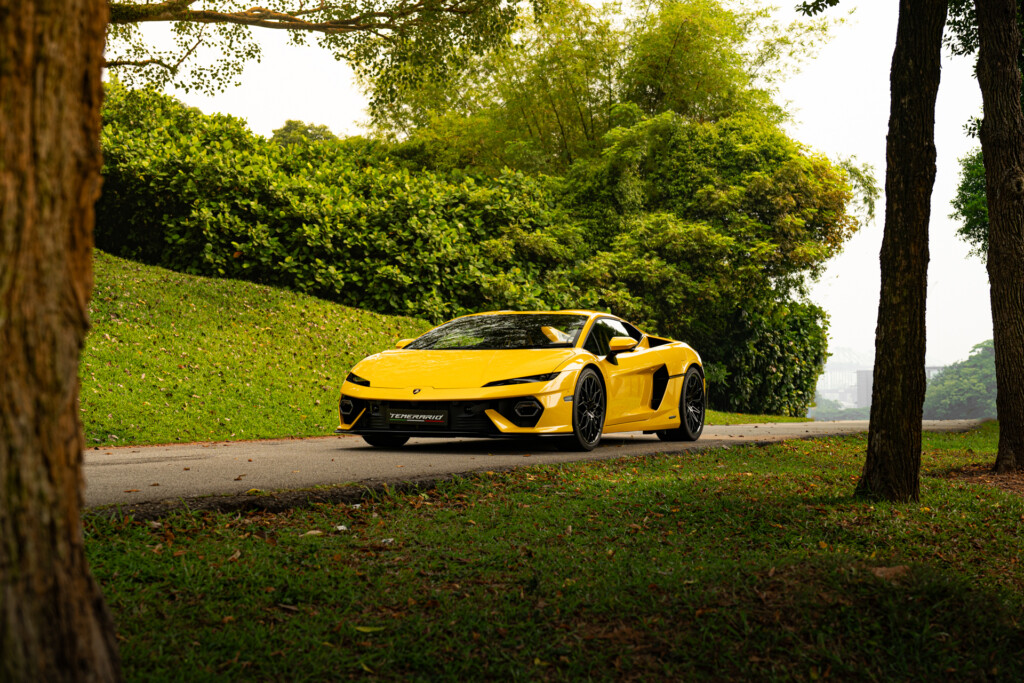
The Huracán gave that to you immediately, with ten cylinders and very little subtlety. The Temerario makes you wait. You press the starter, and nothing happens.
You glide away silently, then you turn the red dial, the V8 wakes up and, somewhere beyond 6,500rpm, the future suddenly sounds rather good.
Technical Specifications
Lamborghini Temerario
Engine: 4-litre V8
Drivetrain: All-wheel drive
Power: 907 bhp
Torque: 730 Nm
Gearbox: 8-Speed (A) dual-clutch
0-100km/h: 2.7 seconds
Top Speed: 343 km/h
Fuel Economy: Just enjoy that V8 man.
Price: POA
Photo Credits: Sean Loo (@auto.driven)
Read more content at Burnpavement, or check out our latest videos on YouTube and on TikTok!