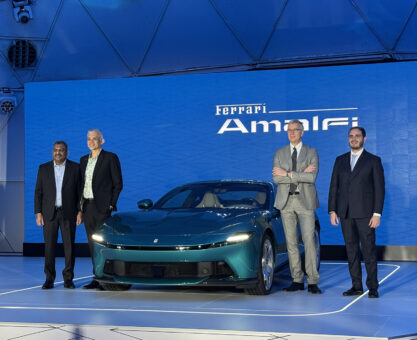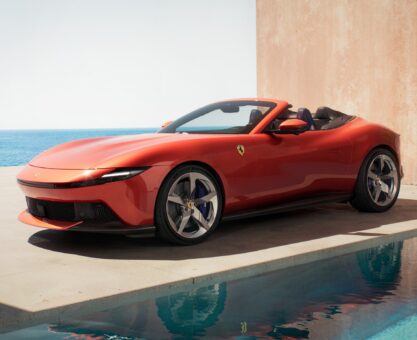
At the recent regional launch of the Ferrari Amalfi, Mr Emanuele Carando, Global Marketing Director of Ferrari, outlined the thinking behind the two-model programme.

Mr Emanuele Carando said the Amalfi Spider’s later arrival was intentional, guided by a single principle: “unpredictability”. He explained that Ferrari chose to introduce the Spider with a delay of roughly six to eight months so that the market would not immediately anticipate what was coming next.
In his view, Ferrari’s clients are often people who “have everything” and therefore value the anticipation and surprise created by a carefully paced product roll-out. He described this as part of a wider marketing strategy in which timing is treated as a core component of the product experience, rather than an administrative detail.
Coupé and Spider, developed for different customer profiles
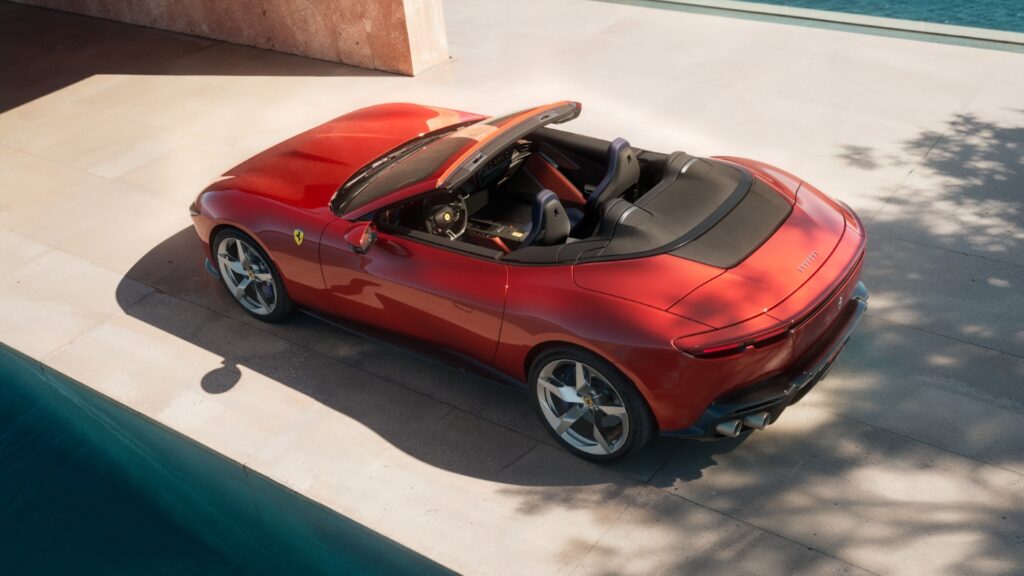
Beyond the theatre of timing, Mr Carando emphasised that the staggered approach also reflects a practical consideration: the Amalfi Coupé and Amalfi Spider are expected to appeal to materially different customers. He contrasted this with certain other products, where buyers may simply decide between a fixed-roof or open-top variant of the same underlying car.
For the Amalfi, the profiles diverge more clearly, making it strategically sound to give each body style its own runway and distinct attention, rather than forcing them to compete for the same spotlight.
A clear product philosophy: “different Ferrari for different Ferraristi”
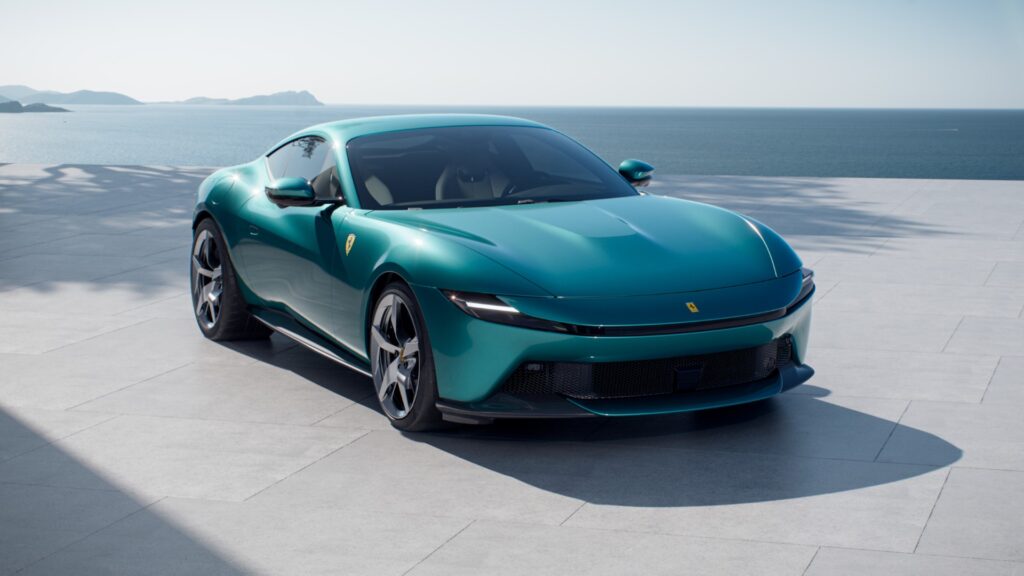
The Amalfi programme is guided by a wider Ferrari product doctrine: “different Ferrari for different Ferraristi and different Ferrari for different moments.”
Ferrari is not attempting to build one universal sports car to satisfy all drivers. Instead, it calibrates each model’s role carefully, so that the portfolio remains coherent and products do not “step on each other’s toes”.
The Amalfi and Amalfi Spider, he suggested, are designed to occupy a clearly defined space within the range: modern, usable sports cars that maintain Ferrari’s core character while serving distinct customer needs.
A “daily-use sports car”, not a conventional grand tourer
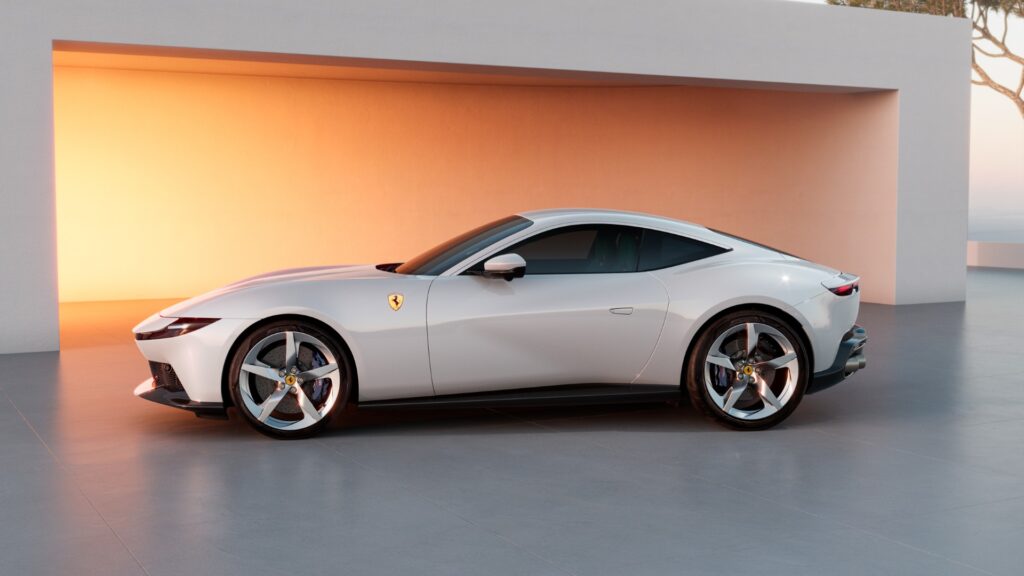
Mr Emanuele Carando was emphatic about how Ferrari frames the Amalfi’s role. He described it as a “daily-use sports car,” and rejected the notion that Ferrari builds traditional GT cars in the way the term is often used in the market.
In his view, “GT” is commonly associated with softer dynamics and diluted performance, whereas Ferrari’s intent is to preserve sports-car sharpness and engagement. The emphasis, he explained, is not on restraining performance for its own sake, but on making the driving experience accessible, progressive, and enjoyable across real-world conditions.
Electrification as a tool, not a default
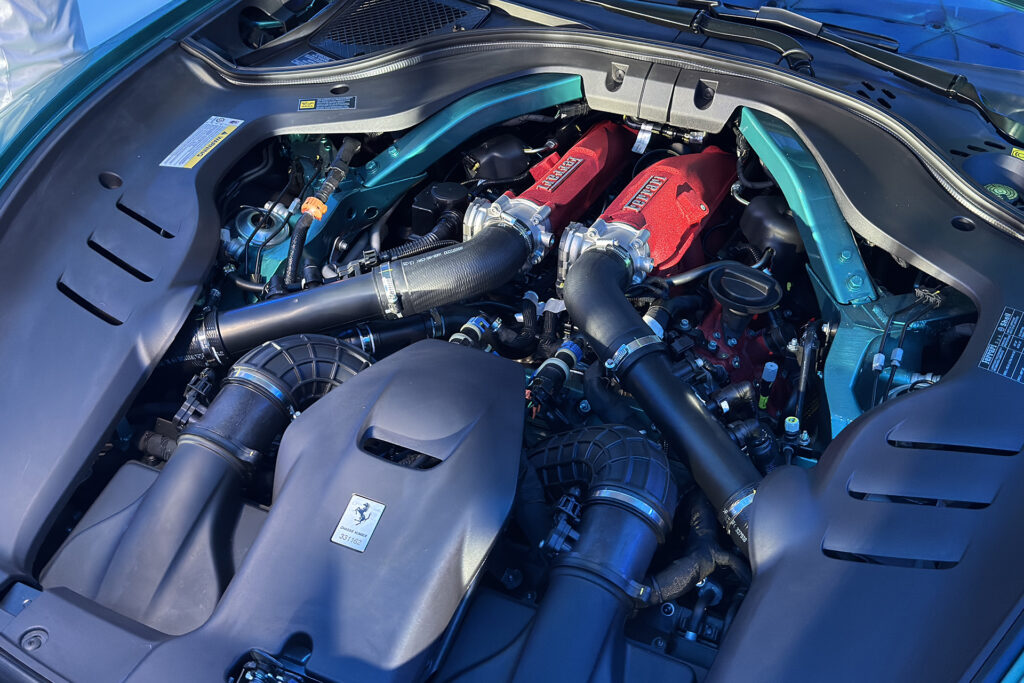
On electrification, Mr Carando framed it as a means to achieve specific outcomes rather than a one-size-fits-all requirement. He said electrification enables “incredible performance”, particularly for models designed for what Ferrari describes as “pilot clients”. These are drivers who enjoy driving alone, may take the car to the track, and often prefer a more aggressive character.
For the Amalfi, however, he said Ferrari selected the V8 to deliver the intended balance of “elegance and sportiness.” The decision, he explained, follows Ferrari’s broader portfolio logic: powertrain choices are made according to what each model must represent, and the type of usage and customer expectation it is designed to serve.
The return of physical controls
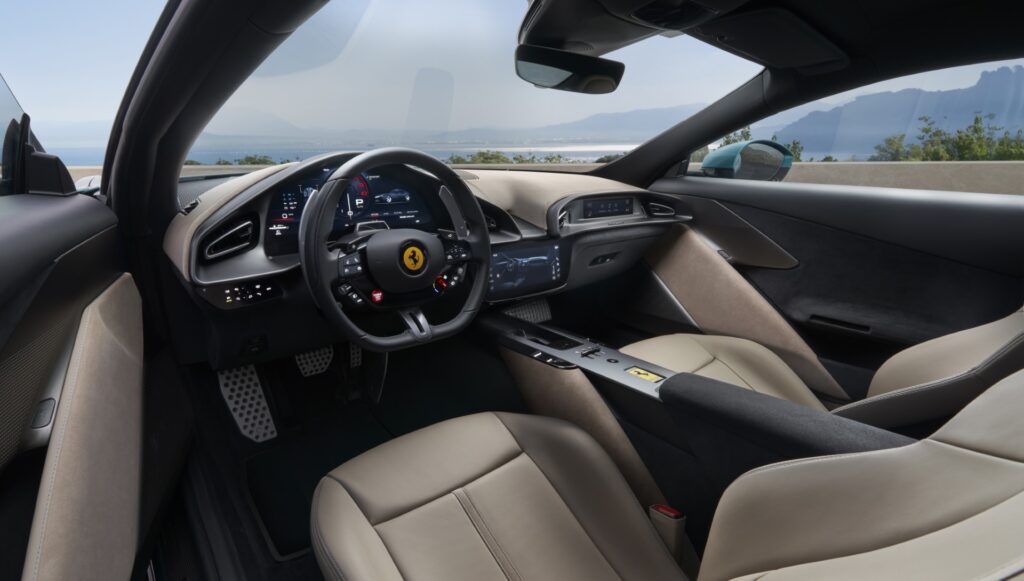
Ferrari has also addressed an aspect of customer experience that has become increasingly prominent in modern performance cars: interface design. The marque has decided to return to physical buttons on the steering wheel, beginning with the F80, and applying this direction to subsequent new models.
Newer cars will feature physical steering-wheel controls on both sides, alongside a physical start/stop solution. This followed customer feedback requesting more tactile, intuitive operation.
The Spider: refinement, comfort, and personalisation
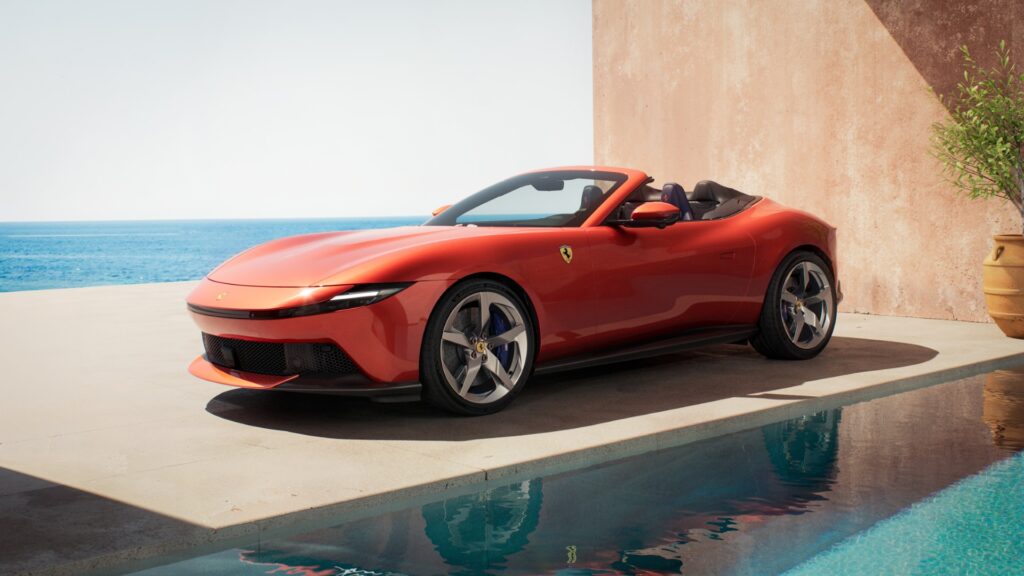
Discussing the open-top model’s lifestyle appeal, Mr Carando noted that modern soft-top solutions have evolved significantly, describing them as “fantastic” and highlighting their sound insulation performance.
He suggested that such developments allow customers to enjoy key benefits associated with a closed-roof car while retaining the character of open-air driving. He also touched upon the importance of personalisation, an area that Ferrari expects to remain central to how clients express individuality through specification choices.
At a time when performance figures are cheap and certainty is everywhere, the Ferrari Amalfi seems to be arguing for something rarer: a sports car that still rewards intent, but does not demand theatre to be enjoyed.
It is, as Mr Emanuele Carando suggests, designed to be lived with, yet still capable of lifting an ordinary commute into something that feels quietly significant.
Read more content at Burnpavement, or check out our latest videos on YouTube and on TikTok!